Israel

What do the midterms mean for 2028?

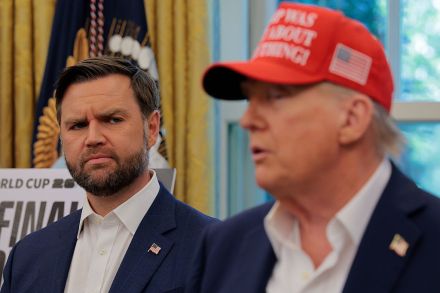
There’s a wonderful old gospel song called “Ain’t Nobody’s Fault But Mine.” That phrase has never passed the lips of Donald Trump, and he’s not about to start uttering it now. But a lot of other Republicans are at least whispering it, and a few are singing openly from the hymnal. They point to President Trump’s over-promising and under-delivering on the pledges he made in 2024. They also note that he told voters this year to think of him as being “on the ballot,” at least in spirit.  The spirit was willing but the ballot box was weak. The Republicans didn’t just lose.
Will Trump and Netanyahu launch another round of strikes on Iran?

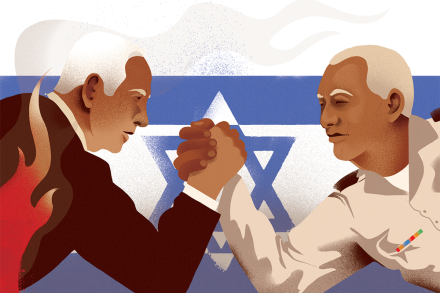
An American political operator contacted me last week, before the blue tidal wave swept aside Donald Trump’s Republicans in Congress, with his favourite quote from the 1997 movie Wag the Dog, about an American president starting a war to distract from domestic difficulties: ‘Change the story, change the lead,’ Robert De Niro’s character declares.  The politico, who once ran an abortive Democrat campaign for president, then predicted: ‘The bigger the defeat, the bigger the bombs Trump drops on Iran.’ At that point, the results of the Israeli elections had already eroded Benjamin Netanyahu’s chances of remaining Prime Minister and left two of the most dominant leaders of the last decade with their backs to the wall.

Should the Pope vote?

From our UK edition

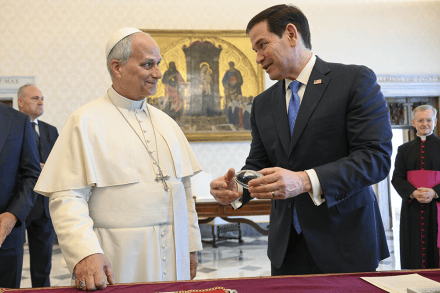
Pope Leo, an American, voted in the US midterms. I am surprised that a foreign head of state can do this, but presumably he is well advised – though not, on such matters, infallible. Paragraph 2240 of The Catechism of the Catholic Church, expounding the 4th Commandment ‘Honour thy Father and thy Mother’, says that ‘Submission to authority and co-responsibility for the common good make it morally obligatory to pay taxes, to exercise the right to vote, and to defend one’s country’. Leo XIV’s age obviously exempts him from defence duties. I imagine that, as head of state, he is also exempt from the attentions of the American Internal Revenue Service. The normal rule is that dual nationals must file full tax returns if they have more than $10,000 in a foreign bank.

Can Netanyahu win again?

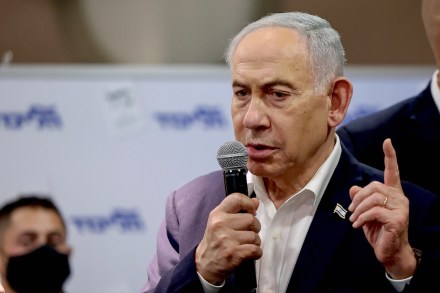
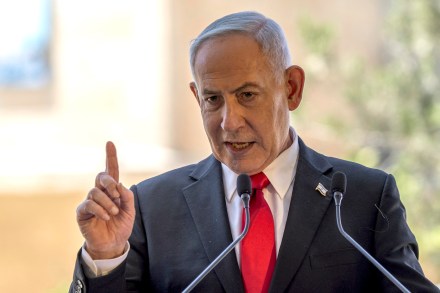
Next Tuesday, Israel holds elections for the first time since the appalling attacks of October 7, 2023. After such a sadistic onslaught, which happened on Benjamin Netanyahu’s watch, many pundits predicted his political days were numbered (though it’s worth noting that neither Roosevelt nor George W. Bush were expected to resign after Pearl Harbor and 9/11 respectively – indeed both were subsequently re-elected.) But Israel is tiny, and in per-capita terms, the loss of life on October 7 was 12 times worse than 9/11 was for the US; 89 times worse than the Bataclan massacre in Paris, 140 times worse than 7/7 in London.

netanyahu

Jeffery Archer’s guide to interviewing Jeffery Archer

From our UK edition

Just back in London from Israel, I give breakfast to Oleksandra Matviichuk. She, with her Centre for Civil Liberties, is the only Ukrainian ever to have won the Nobel Peace Prize. In Kyiv, now bombed day and night, the winter will soon set in and some of her friends, as last winter, will have to erect a tent inside their flats to preserve all possible warmth. ‘Cold becomes a factor in all your decisions,’ she says, including when to wash her lustrous long hair. Since Donald Trump began his ‘28-point peace plan’, Russian attacks have risen by nearly a third, with havoc wrought by jet drones which cannot be stopped now that American help is withheld.

America must shore up its missile-building capabilities

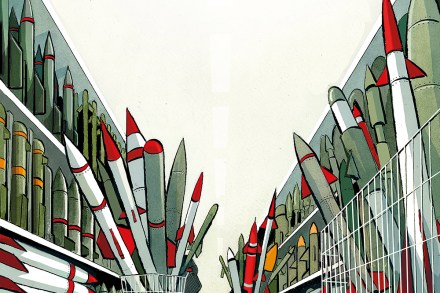
America’s war with Iran is in its eighth month and stuck. On September 26, Donald Trump confirmed that he had rejected Tehran’s offer to reopen the Strait of Hormuz in return for lifting the American naval blockade and easing sanctions. He has reportedly told his staff that renewed bombing is likely after the midterm elections on November 3. He is reluctant to resume major combat any sooner. The embarrassing question is whether America actually has enough missiles to bomb Iran. The West spent a generation persuading itself that making clever weapons could compensate for making fewer of them, with even fewer factories and a thinner web of suppliers behind them. The reality of war is messier and less obliging.

missile

Letters: Why Douglas Murray should attend the St Paul’s rave

From our UK edition

The need for Mammon Sir: Douglas Murray is right to wince at Sadiq Khan’s gloating over the partnership at St Paul’s with the nightclub Fabric (‘Would Sadiq Khan back a rave in a mosque?’, 12 September). But the decision to host club nights is simply about cash. Since the government scrapped the Listed Places of Worship Grant Scheme, historic churches now face an extra 20 per cent VAT bill on all maintenance. The National Churches Survey reveals that 39 per cent of them have roofs at risk or in urgent need of repair. Cathedrals cannot fund seven-figure restoration projects through the Sunday collections alone. Cathedrals have always had multiple uses.

Portrait of the week: Britain sanctions Jewish settlements, Dover protests erupt and the AfD wins big

From our UK edition

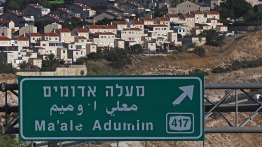
Home Ed Miliband, the Foreign Secretary, set out in the Commons new restrictions on buying goods made in Jewish settlements in the Israeli-occupied West Bank. The government, he said, ‘agrees’ there is ethnic cleansing in areas of the West Bank, carried out by ‘settler terrorists’. France, Canada, Denmark, Spain, Finland, Ireland, Iceland, Norway, Poland, Portugal and Sweden would impose similar sanctions. Israel announced as a ‘counter-measure’ the closure of the British consulate in Jerusalem. Hundreds of protestors, dressed in black and wearing face coverings, blocked roads at Dover on Saturday, some chanting: ‘Stop the boats.

Ed Miliband has chosen to make British Jews less safe

From our UK edition

On Tuesday, the Foreign Secretary, Ed Miliband, noted that the government is devoting an extra £250 million this year to enhance the security of Britain’s Jewish community. He did so in the context of a statement about British foreign policy and efforts to advance a two-state solution in Israel/Palestine. Mr Miliband is many things, but he is not stupid. He knew what his government was doing. And he knew why the two things were connected. The decision by the British government to sanction anyone associated with what they term ‘illegal settlements’ in the West Bank has heartened every anti-Semite in the world.

The Israeli settlements lie

From our UK edition

There are few phrases in international affairs repeated with greater confidence or subjected to less scrutiny than ‘illegal Israeli settlements’. It appears in UN resolutions, government statements, NGO reports and news bulletins as though it were an established fact. Add the words ‘under international law’ and apparently further discussion becomes unnecessary. The trouble is not just that this is political rhetoric masquerading as law, but that it is in fact contrary to real international law, properly applied. The claim rests upon a series of propositions about Israel’s borders, the legal nature of occupation and the meaning of provisions of the Fourth Geneva Convention, propositions which have hardened into orthodoxy through repetition.

Britain’s sanctions against Israel will backfire

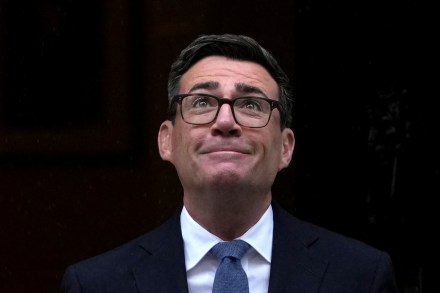
The historian Niall Ferguson, sometimes of this parish, said: “The law of unintended consequences is the only real law of history.” The new British Prime Minister Andy Burnham’s government is getting a lesson in that with its new sanctions on goods from Israeli settlements. The sanctions are meant to help the cause of a Palestinian state but may have the opposite effect. As an added bonus, they could hit British exports to the US. Ben-Gvir demanded international sanctions against Britain as long as we remain in possession of territory ‘violently stolen from the Argentine people’ The “comprehensive reset” of British policy towards Israel comes in the middle of a rancorous Israeli general election campaign.

Britain Israel

Why Britain’s West Bank sanctions are savvy politics

British PM Andy Burnham’s move to impose sanctions on West Bank settlements is politically savvy – but not because it will achieve his purported aim of advancing a two-state solution. For one thing, the impact in Israel will be minimal. Ed Miliband was clear that the new sanctions regime will target those “providing services such as construction or financing for Israeli settlements,” while trade within the Green Line will continue. Yet the principal providers of such services to the settlements are Israeli banks, major companies and the Israeli government itself. Short of Miliband sanctioning them, the policy is unlikely to achieve much. The economies of the West Bank and Green Line Israel are completely intertwined.

west bank sanctions

The new age of influence campaigns

Midway through a podcast appearance, my host became distracted by a flurry of social media posts claiming that he was a paid agent of the Israeli government. The host was Tim Pool; the accuser was Alex Jones, until then Pool’s friend and ally. The dispute began last month, when Pool suggested that Jones’s recent dip in online viewers had more to do with his wavering on Donald Trump than with any covert censorship. The argument quickly escalated, with Jones asking whether Pool was taking “marching orders” from Benjamin Netanyahu. I have no beef with Jones, but I doubt that Pool, who earns a healthy eight figures from his podcast, would torch his credibility for a little extra money.

The sanctimonious campaign against Boy George

From our UK edition

In the musical Allegra, which has just finished its run, I ran around singing, dancing and jumping on tables for a couple of hours. I have a lot of elderly friends – by which I mean my age – who saw the show and they told me they felt exhausted just sitting there watching. ‘Oh,’ I’d say airily, ‘it’s just my job.’ I didn’t mention the mornings: the hollow, aching bones, the ferrety eyes, the corncrake voice and the need to stagger downstairs at 3 a.m. for calming milk and nutmeg. At one point, I tripped over halfway through ‘Take Me Out to the Ball Game’ and carried on singing on my knees like a restricted-growth version of Al Jolson. My granddaughter, 14, thought it was a brilliant stunt worthy of Crouching Tiger, Hidden Dragon.

Finally – an authoritative, stimulating history of the modern Middle East

From our UK edition

Around 350 pages into Simon Sebag Montefiore’s exhilarating and accomplished history of the modern Middle East, we reach the present – or at least times that are so close to us that they are very much part of our recent lived experience. We have, to be fair, left long ago the realm of archives and yellowing press cuttings, black-and-white photographs and oft-cited quotes, and have been traversing for some time the years of all-too-bloody recent memory: 9/11 and its consequences, the Iraq War, the rise of ‘neo-Ottoman’ Turkey, the Arab Spring and much else. But suddenly here we are.

The man who could topple Benjamin Netanyahu

The year is 2019 and, after almost a full term in office, Benjamin Netanyahu’s coalition government of right-wing and religious parties heads to a general election. Opposing him is a former IDF chief of staff heading a new centrist party which quickly soars in the polls, making him the main challenger for prime minister. That challenger was Benny Gantz. Gantz formed alliances, fought elections and got caught up in the paralysis of Israel’s 2019-20 governing crisis in which nobody was able to form a coalition. Facing the threat of the Covid-19 pandemic, Gantz agreed to a deal with Netanyahu where they’d take turns at being prime minister – with Netanyahu going first, of course. Nobody except Gantz believed his turn would come.

Looking for Katrin: Rory MacLean goes in search of his dead wife

From our UK edition

One September, Rory MacLean’s wife, Katrin, was diagnosed with terminal cancer. Seven months later she was dead. The couple had been married for 32 years. In the wake of his wife’s death, MacLean decided to write a book about the afterlife. He had already written books about Russia and Myanmar, Berlin and Crete, but it was not clear where this journey should begin. ‘Unfortunately, few who entered heaven alive returned with a guidebook.’ Over the next five years, he travelled the globe, learning how different faiths understood the afterlife and exploring various sacred sites and religious rites. At the same time he read a wide range of mystical writers and collected insights into death from science, philosophy and the history of religion.

Does the Donroe Doctrine support Argentina on the Falklands?

So FIFA is going to take action against the Argentinian players for unfurling their "Las Malvinas son Argentinas" banner after beating England in Wednesday’s World Cup semi-final. The act was a clear violation of the Federation’s rules about politicizing the game. Typically, however, any fines or suspensions will come into force after the final is out of the way on Sunday – meaning the punishments will be all but pointless. Cue more wild conspiracy theories about FIFA’s closeness to Argentina, the Nazis and the Masons, and goodness knows what else. Sane people probably realize that it’s not worth getting too het up about what a bunch of overpaid, talented but dishonorable sports stars think about the Falkland Islands, which have belonged to Britain for two centuries.

America is still gripped by the gerontocracy

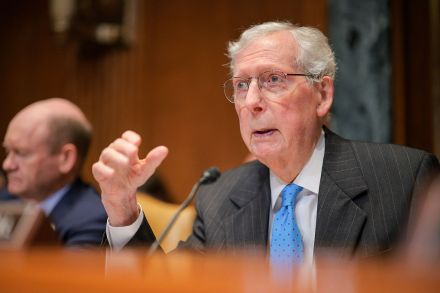
What do senior Republican Senator Mitch McConnell and Iran’s new Supreme Leader have in common? Not a lot, except that both men are currently being hidden from public view – and nobody seems to know for sure if either Mitch or Mojtaba Khamenei is alive or dead. Iran is a brutal theocratic regime where the truth tends to be suppressed. America is meant to be a free and democratic society. Yet the 84-year-old Senator for Kentucky has been in hospital since June 14 and rumors are spreading that he is brain-dead, on life-support, or possibly worse, and the party leadership appears to be covering up the facts about his health.

Israel’s plan for a new Iran war

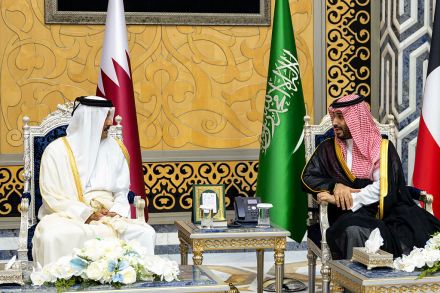
Metaphorically speaking, champagne bottles were uncorked in the Jerusalem office of Israeli Prime Minister Benjamin Netanyahu after Donald Trump declared at the NATO summit in Ankara that the ceasefire with Iran was over. Trump’s remarks – in which he branded Iran’s leaders "scum," "a cancer" and "liars" – were sweet music to Netanyahu and his government.  The 60-day ceasefire, brokered by Pakistan and Qatar on June 17 to end the war between the United States and Israel on one side and Iran on the other – a war that began on February 28 – was effectively imposed on Netanyahu. The Israeli Prime Minister, Mossad, the Israel Defense Forces and the Israeli Air Force all wanted the fighting to continue.

iran