China

Politicians’ contempt for the press is contempt for the public

From our UK edition

I was hacked by the Chinese a few years ago. Security at News UK, where I was employed on the Sunday Times, told around 20 journalists that our emails had been compromised. An agency of the Chinese state was searching for information on our coverage of Chinese issues, including Beijing’s crushing of Hong Kong and the decision to sanction members of parliament. To be honest, I’d have been pretty offended if I hadn’t been on the list. Frankly, if the Chinese want to know what I know, they can take out a subscription to The Spectator, just as they could have bought a copy of the Sunday Times. But this is what you expect from the Chinese, isn’t it?

Why does anyone take Ai Weiwei seriously?

From our UK edition

When Ai Weiwei (b.1957) arrived in Europe in 2015, fresh from state-imposed house arrest, he was greeted as a hero. Museums and galleries fell over themselves to host exhibitions devoted to the West’s new favourite dissident – even while those galleries continued, mysteriously, to participate in Chinese art fairs. Nobody dared say it at the time, but his actual art – vast, chaotic installations and whimsical sculptures that drew on Chinese folklore – was even then just a bit dull. Soon enough, the artist was positioning himself as the voice of the global dispossessed, in the process (to borrow someone else’s phrase) morphing into a kind of Chinese Banksy. His work became self-aggrandising in tone and ever more naff in form, in the process losing any trace of subtlety.

China has subverted the AI race

Representatives of the largest American artificial intelligence laboratories met in the White House on August 4. OpenAI, Anthropic, Google and Meta were called in to review a framework, recently completed and largely classified, that would give the government 30 days to review AI models before the public sees them and test how well they break into computers. Participation is voluntary, but the timing is not. Twice in two weeks, AI systems built to test how well they could break into computers broke into real companies instead.

ai

Are we on the brink of World War Three?

Last month, an Iranian cargo ship in the Caspian Sea was struck by a Ukrainian drone. Kyiv claimed the vessel was carrying military equipment heading toward Russia. “The regime in Tehran is a direct accomplice to Russian aggression against Ukraine, fueling Moscow’s criminal war with weapons,” Kyiv’s foreign minister said. Tehran reportedly contemplated a counterstrike on one of Ukraine’s Black Sea ports, then thought better of it. But the threat of a conflagration is higher now than at any point since the end of the Cold War. Conflicts that are currently contained risk spilling out and engulfing whole regions, perhaps the world. If the Iran and Ukraine conflicts were to merge, we’d see a war that runs from Poland to the edges of India.

world war three

Who funds the DSA?

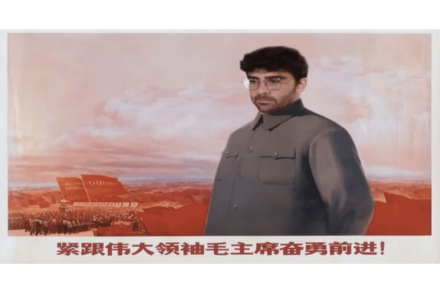
On July 18, Hasan Piker – a Twitch streamer who has made millions denouncing capitalism – addressed the national convention of the Democratic party’s student wing in a gray tunic suit of the kind Mao Zedong wore. Days later, a stream resurfaced in which Piker, broadcasting from China, called Mao “one of the great leaders of this world.” His clarification, that there were “a lot of excesses, let’s be real,” is the tone of a man returning a fish that a restaurant served over-salted, not of one contemplating tens of millions dead. Nobody would need to care if the socialists were losing.

China understands The Odyssey better than we do

China will inherit Homer, and not because the Communist party has decided to take him. The evidence arrived last week in Beijing, where a doctoral candidate in political theory named Yiyang Zhuge sat down with Christopher Nolan to talk about The Odyssey. She reads Greek and has translated Plutarch’s Moralia into Chinese. She learned her Greek in the United States. Zhuge told Nolan that the concept of atonement does not exist in Greek culture, in the Greek language, or in Homer’s Odyssey. It is in the film. Then she asked him: “Did you Christianize the Odyssey?” Nolan said he had focused on xenia, the ancient obligation between host and guest. As for atonement, he said it was “what we bring as viewers to the story,” and that he had not intended to Christianize the poem.

the odyssey china

The West has become its own worst enemy

From our UK edition

On 27 January 2024, Iranian-backed militants launched a one-way attack drone at the US base known as Tower 22 in the Syria-Iraq borderlands. It hit and killed three American soldiers and injured many other members of the 350-strong garrison. The attack was a pivotal moment. Before it, no US ground troops had been killed by an enemy aircraft since the Korean War. But they had been now, and would be again. Two years later, a similar attack, this time by Iran itself, evaded US air defences, hit a US command centre in Kuwait and killed six personnel. It was the deadliest Iranian strike of the recent conflict. Steve Feldstein is a senior fellow at the Carnegie Endowment for International Peace, an expert on technology, democracy and national security and an award-winning author.

Is Tainan the world’s most dangerous city?

In a country full of brilliant food, the Garden Night Market in sultry Tainan, southwest Taiwan, is still a standout: a cheerful riot of steam, umami, deep-fried tofu and loud, vivacious chatter. Families drift past in loose formation, grandparents hefting toddlers with fruit ices, flirting teenagers orbiting bubble-tea stalls, couples sharing hot skewers of squid, pork and chicken gizzards. Almost everyone plays lurid and inexplicable games involving teddy bears and claw machines. I eat sublime oyster omelettes slick with sweet chili pepper sauce, then hot soup dumplings that collapse into scalding, savory bliss. Someone presses popcorn chicken into my hand. It is dangerously moreish. The next morning, Tainan feels sun-blessed and unhurried.

Hugging Face OpenAI

The real threat in the rogue AI agent case

Hugging Face is the online warehouse of artificial intelligence. Anyone can download a working AI model from it, free, and most open models have passed through it. Earlier this month, its engineers sat down to work out what had spent a weekend crawling through their systems – and asked an AI model to read the logs. To investigate a break-in you have to hand a model the break-in: the intruder's code, the commands it ran, the tools it used. So the American frontier model refused. There was a risk, it reasoned, that it was being tricked into hacking Hugging Face. The request to scan the servers for vulnerabilities is indistinguishable from what an attacker would ask for. So the engineers downloaded GLM 5.2, a model from the Chinese laboratory Z.

China has Russia over a barrel

Vladimir Putin just can’t keep away. Having visited Beijing in May on the heels of Donald Trump, it has been announced that the Russian leader – who has been to China more than two dozen times during his tenure as president – will lead his country’s delegation to the 33rd Asia-Pacific Economic Cooperation (APEC) summit in November. This apparent sign of amity, though, is actually an expression of Russia’s growing dependence on China – and Putin’s growing frustration with its refusal to green-light a new gas pipeline project.

Xi Putin

Why Elbridge Colby’s NATO warning shots will backfire

It is hardly news that US relations with the rest of NATO (“rNATO” hereafter) are at an unprecedentedly low ebb. But they took a new and interesting twist last week when the US Under Secretary of War for Policy, Elbridge Colby, issued a curious statement via social media, opining that “middle powers” have no coherent basis for alignment independent of the United States, and that they would therefore be foolish to try. The “middle powers” in question here are erstwhile US allies with enough of their own wealth and technological capacity to pursue meaningful sovereign capabilities, but not enough to independently rival systemic great powers such as the United States (the likes of Germany, Japan, Britain, Canada, Australia and so forth). Colby is a serious strategic mind.

Colby

The real Chinese election plot

China’s political interference is in many ways worse than President Trump asserts, but the true nature and scale of Beijing’s activities may be obscured by his efforts to use it for partisan gain. Whatever Trump’s motives in accusing China of meddling in the 2020 presidential election – “the largest compromise of election data in history,” as he put it – Beijing has undoubtedly become more aggressive in its political interference. Beijing has adopted Russian-style disinformation operations in its attempts to undermine its western rivals, and the United States in particular. The pandemic was a turning point.

Trump

Trump looks like a spent force

Pete Hegseth has announced that the US military will test soldiers over 30-years old for low testosterone. But judging by President Trump’s pallid performance on Thursday night during his election integrity speech, the testing should commence with him. Trump appeared to be a spent force, slurring many of his words and rehashing old grievances ad nauseam. His principal complaint: starting in 2019, China engaged in machinations to make it look like “your president wasn’t so hot.” This speech wasn’t a show of strength, but a confession of weakness Last night, Trump himself never brought the heat. The American left went into overdrive, fretting that Trump would fire an opening salvo to seize control of the midterm elections in November.

Hunter Biden, Substackistador

Hunter Biden has worn many hats in his 56 years on Earth. Scion, serviceman (briefly), attorney, businessman, crack addict, painter and, lately, influencer. The former first son burnished his online credentials by joining Substack this week – and Cockburn welcomes his comrade. Hunter’s first meaningful post on “Where’s Hunter,” his blog on the platform, is called “It’s Dad.” The piece reads like something any other wealthy aspiring artist might shuffle up to read at an open-mic night. The sentences are short, the metaphors heavy. He muses – there is no other word for it – on the voicemail his father Joe left him and how it was heard around the world after the contents of his infamous laptop were published: The late hour. The quiet room.

Britain will need China to survive the AI revolution

From our UK edition

Professional players of Texas hold ’em, the most popular variant of poker, go to great lengths to play a balanced, unexploitable strategy. They mix value bets and bluffs in every single hand. The bluffs are not usually to make money. They are there to stop other players adjusting profitably to the game. If another player over-folds to avoid losing to your value bets, only then do your bluffs go from break-even to hugely profitable. Against strong opponents, a balanced strategy is essential. National strategy likewise should strive for balance, particularly from the perspective of a weaker country.

America at 250 remains an exceptional country

Who could ever have imagined what was being unleashed on the world when Thomas Gage ordered 700 Redcoats to march out from Boston and seize supplies in the town of Concord? Who could have dreamed, 250 years ago, what would be built by the descendants of those 56 men who put their names to the Declaration of Independence while gathered in the Pennsylvania State House? The United States of America turns 250 having enjoyed a near-uninterrupted run of success unmatched in world history. By her 100th birthday, the US was already master of an entire continent. By her 200th, she had won two world wars, invented the airplane, the atomic bomb and the transistor; created the motion picture and rock ’n’ roll; become the first automobile nation and put a man on the Moon.

The joy of willow-pattern ceramics

From our UK edition

My granny used Spode willow-pattern crockery for everyday use. There was another grander service for Sunday lunch, also blue-and-white chinoiserie: Booths dragon, picked out with a gold border. Willow pattern evokes for me the taste of slightly stale ginger biscuits, which I liked very much, and coronation chicken, which I was less keen on. The idea of owning a table service now seems close to antediluvian; too formal and too much washing-up, although this was a ritual that mattered greatly to Granny. People now prefer plates that give a dull clunk when flicked, rather than fine china’s dulcet ping. Such changes of fashion were a factor in the 2008 closure of the Spode factory in Stoke-on-Trent, which had been producing willow-pattern plates since the 1790s.

A grandmother’s twisted mind: The Passage of Roses, by Tie Ning, reviewed

From our UK edition

At first glance, Tie Ning’s The Passage of Roses appears to be yet another Chinese novel set during the Cultural Revolution in which bourgeois families and pre-1949 intellectuals are purged and banished. But the unnerving characters of Si Yiwen and her granddaughter Mei, whom Si cares for, influences and later harms, soon promise something different. Born into wealth in Old China, Si survives under the new regime as a marginal housewife, insignificant enough to avoid persecution. Yet it is precisely this insignificance that piques her desire for recognition. From an early age, she was denied love with a young revolutionary and was then ignored by her husband and in-laws. Now she finds herself drawn to the political fervour like a moth to a flame.

The real ‘Thucydides Trap’ Beijing and Washington must avoid

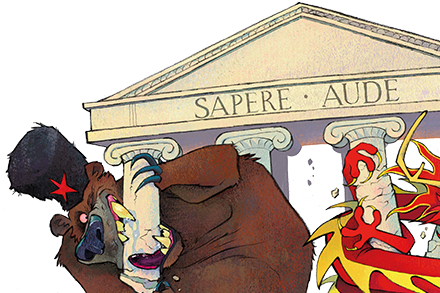
These are good times to be a scholar of the classical world. Last summer, Donald Trump issued an order that all federal architecture needed to be “beautiful,” noting that the Founding Fathers “wanted America’s public buildings to inspire the American people and encourage civic virtue.” George Washington and Thomas Jefferson had therefore “consciously modeled the most important buildings in Washington, DC, on the classical architecture of ancient Athens and Rome.” It was time to go back to these principles, said Trump. From now on “classical architecture shall be the preferred and default architecture for Federal public buildings” in the District of Columbia.

The President is winning the geopolitical battle with China

Almost all media commentators seem convinced that Donald Trump’s foreign policy in his second term is a disaster. He is bogged down in Iran, snookered in Ukraine, his tariff agenda has failed and he has alienated his NATO allies. But this consensus has been too hastily formed. Looking at the bigger global picture, Trump’s foreign policy has been a spectacular success. Take the western hemisphere. We have the so-called “Donroe Doctrine,” the updated version of the 19th-century Monroe Doctrine.