Culture

Culture

Trump pulls the plug on mainstream TV

The unveiling of President Trump's new helipad on the South Lawn of the White House yesterday was a curious affair. Trump cut a ribbon with the CEO of Lockheed Martin, who donated the helipad, and then attempted to address the media who were present. Viewers on TV could see what was happening – but they could only hear a low, ethereal whooshing noise. The main TV networks’ boom mics were nowhere to be seen – as ABC, CBS, NBC and Fox News suspended their pool coverage of Trump, in solidarity with CNN and MS NOW, whose credentials were arbitrarily revoked by Trump on Friday afternoon. “He pretty much yelled into a static void for nine minutes and then left,” one of Trump's favorite reporters wrote on Instagram.


Nikole Hannah-Jones and the hard bigotry of progressives

Nikole Hannah-Jones is having a moment every parent dreads: questioning whether her decisions as a parent has damaged her child. In her case, the evidence seems clear… it did. In the New York Times magazine, Jones, who makes a healthy six-figure salary, including receiving tens of thousands of dollars for paid speeches, decided to send her daughter to an economically deprived public school out of an obligation to the greater good instead of giving her daughter more advantages that could help her get into a better college and perhaps a high-paying career. Jones first wrote about choosing her daughter’s school in 2016, when she described her desire to send her child to public school but the difficulty of selecting a school in a “segregated city.

Nikole Hannah-Jones is having a moment every parent dreads: questioning whether her decisions as a parent has damaged her child

Billy Strings’s extraordinary and exhilarating new album

It’s easy to get the wrong idea about bluegrass – to imagine that this flinty shard of American traditional music is baked centuries deep into the soil of Appalachia. In fact it developed in the 1940s, pioneered by Kentucky maestro Bill Monroe, and only truly flourished during the American folk revival of the 1960s. Bluegrass was one of the few places where the hippies and good ol’ boys found communion; the Grateful Dead’s Jerry Garcia was a devotee. The style has evolved, generation upon generation, via exponents such as Lester Flatt, Earl Scruggs and Del McCoury. The latest bluegrass star is William Lee Apostol, aka Billy Strings, a 33-year-old guitarist, singer and songwriter from Michigan, whose backstory reads like some grisly American gothic melodrama.

The Grand Tour is the perfect TV to pass out to

The Grand Tour – aka Amazon does Top Gear – is back with a new trio of presenters. Whether you care will largely depend on your general attitude to television. If you think its purpose is to push boundaries, entertain, inform and edify, you may as well stop reading now. If, on the other hand, you treat TV like soma, then the lightly revamped show is probably worth your consideration. I’m in the soma category. The only job of TV, as far as I’m concerned, is to relieve me of having to make conversation with the Fawn while I’m having my supper, and then to distract me long enough for me to be able to half-digest my food so that I’m ready to have my bath and go to bed.

The wonder of the Bayeux Tapestry

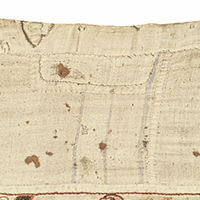
How the Froggies must be laughing. Such a gracious loan. So kind. Like England lending Henry V’s longbows to the Louvre – or sailing HMS Victory up the Seine. Well, let them titter. The Tapestry is home. Nothing else matters. Likely sewed in Canterbury in the 1070s, before being sent across the Channel, it has only ever left Bayeux twice before. In 1803, when Boney was contemplating a pop at the White Cliffs, he displayed it in Paris. (After Trafalgar, it was quietly returned to Normandy.) Then, as the Nazis were retreating from Operation Overlord, it was taken for safe-keeping to the cellars of the Louvre and, in late 1944, only weeks after Paris’s liberation, placed on public view. Today’s minibreak from Bayeux comes in rather happier times.

leader

First among equals: what makes a great leader and does it matter?

Almost two decades ago, Jared Diamond cemented his international reputation with Guns, Germs, and Steel, which argued that geography and environment rather than racial differences shaped the rise and conquest of nations. Still going strong at 89, he has now written a book on leadership. This is a crowded literary space, but Diamond offers a distinctive approach. A distinguished biologist and polymath, he has little time for the Great Man theory of history popularized by the 19th-century essayist Thomas Carlyle. Altogether too subjective, he says, never mind the absence of women. Leo Tolstoy’s War and Peace is no better a guide, since it casts individuals as constrained by circumstance, with scant influence over events.

smell

The history and importance of smell for our antiseptic age

For smell historians and experts, of whom there are gratifyingly more than you’d think, a standard assumption to be skewered is that olden ages stank; the modern world doesn’t because hygiene and chemicals have banished stinks in the name of progress. According to this reading of history, banishing odors is a sign of progress. Civilization doesn’t smell. Neither Bjørn Berge nor William Tullett stand for this. For them, older times may have been smellier, but people were comfortable with living alongside middens, rotting corpses and foul tanneries. Smell in the modern age is now under threat and at risk of extinction or of being even more marginalized – Tullett uses the word “ephemeralized” – than it already is in this age of visual primacy and screens.

She lived frantically ever after: the jaw-dropping life of Barbara Cartland

Matthew Sweet’s jaw-dropping life of Barbara Cartland opens with the grande dame reclining on her chaise longue in the library of Camfield Place, her home for 50 years. Here she could be found daily between 1:15 p.m. and 4 p.m., a ghoulish masquerade of femininity in a hot-pink taffeta cocktail gown with a snappy Pekingese nestling by her side. Her face, beneath the halo of Elnett-stiffened yellow hair, bears an inch of white powder. There are two clownish circles of rouge on her cheeks and sticking plasters on her temples to tighten the skin. Gazing into the middle distance through tarantula-sized false eyelashes lathered in black boot polish, she is “talking, talking, talking.” (Boot polish applied with a toothbrush is preferable to mascara because it stays put when you cry.

Will Anna Wintour survive the Galliano debacle?

In this summer’s couture blockbuster The Devil Wears Prada 2, the moment of greatest humiliation for Meryl Streep’s Miranda Priestley comes about halfway through the film. With her Vogue-adjacent fashion magazine Runway imperiled by budget cuts and its philistine new owner, Miranda is not spared the hair-shirt treatment the rest of her staff endure. In a scene that is supposed to be funny but ends up being almost tragic, this ice-hearted doyenne of the fashion world is compelled to travel from New York to Milan Fashion Week in coach class, among hoi polloi. As the usually excellent Streep is forced to mug and gurn at the humiliation that she endures, I found myself mouthing “The horror! The horror!” – but for altogether different reasons.

Will the real B. Traven please stand up?

One hesitates to describe The Treasure of the Sierra Madre – perhaps now best known for its 1948 film adaptation starring Humphrey Bogart – as the great American novel, or even a great American novel. Its prose is too unwieldy, its structure too ungainly. While you, the reader, wish it spent more time with its characters – a trio of beat-up prospectors called Dobbs, Curtin and Howard – it is given to flights of economic theory about labor relations in 1920s Mexico, a setting great American novels don’t tend to trouble themselves with. Besides, its author, B. Traven, was almost certainly German and may never have spent time in the United States. Hang on. Almost certainly? May never?

Brown furniture isn’t dead

Throw out your grandfather clocks, the naysayers said, and banish your commodes to the scrapheap and junkshop. Brown furniture – invented in the Georgian and Regency eras and popularized for the mass market in the Victorian period – has been decreed by those tastemakers in the know to be as dead as Jacob Marley – a man who undoubtedly would have cherished those heavy mahogany bed frames and cabinets that were synonymous with his age – and showing even fewer signs of returning, even in spectral form.   The reasons for the apparent demise of brown furniture are less to do with a rejection of sturdy, well-built items that were once the pride and joy of any household and more because we are living smaller lives, in all senses.

brown furniture

Lonnie Bunch’s long march through the Smithsonian

Lonnie G. Bunch III, the first black head of the Smithsonian Institution, is stepping down after a tenure of some seven years. NPR had the news: “In 2019, Bunch was named secretary of the Smithsonian, becoming the first historian and the first African American to hold the position.” The Wall Street Journal also got the memo: “The first Black historian to lead the world’s largest museum and research complex says he’s retiring and will leave by year’s end.” NBC looked behind the headline. “Bunch, the first Black person and first historian to lead the institution, has said he would have retired a year ago but felt he had to stay to defend the institution from the White House attacks, the person said.

Welcome to the Silicon Valley cinematic universe

Yesterday, a teaser dropped for Artificial, a biopic directed by Luca Guadagnino based on Sam Altman’s brief ouster from OpenAI in 2023. Earlier this summer, a trailer was released for The Social Reckoning, Aaron Sorkin’s Meta drama, which is a follow-up to his 2010 film about Mark Zuckerberg and the founding of Facebook, The Social Network. And in the past few days, audiences at the Venice and Telluride film festivals have been hyping up Nathan Fielder’s documentary You Can See Everything about the Theranos founder/fraudster Elizabeth Holmes, as well as Alex Gibney’s Musk documentary. (Gibney made an earlier documentary about Holmes, who has already been the subject of a biopic, played by Amanda Seyfried in The Dropout.

How Miles Davis and John Coltrane changed jazz forever

Why does the jazz world still feel so bedazzled by trumpeter Miles Davis and saxophonist John Coltrane? This year marks the centenary of their births, and even those who consider jazz marginal to their interests are likely to know Davis classics such as Sketches of Spain and Kind Of Blue, while Coltrane has almost become deified: there’s even a fully functioning Saint John Coltrane African Orthodox Church in San Francisco. The jazz industry, meanwhile, is gorging on their centenaries with recordings, new and reissued, and books, new and repackaged.

The Met museum has humiliated John Galliano

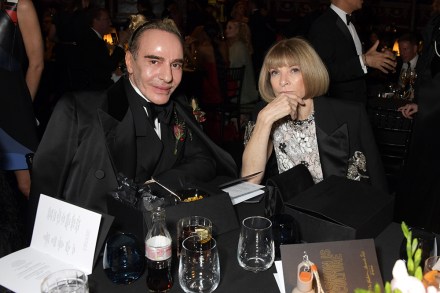
John Galliano’s reign at Dior was before my time. But he was the first Brit to put his mark on a great French couture house and, in any way you care to look at it, he has been one of the most consequential figures in fashion for the past four decades. Which is why it felt right that the Metropolitan Museum in New York should announce it would be holding a show of his work, and why it felt wrong when they pulled the show earlier this week.  Galliano's star burned brightly until early 2011, when over the course of two months or so he came apart. There was a damning video of him in a Paris café, hissing at a woman about her “ugly Jewish face” and later telling a man he was a “f-king Asian bastard” he would kill.

UN map

Are our maps colonialist?

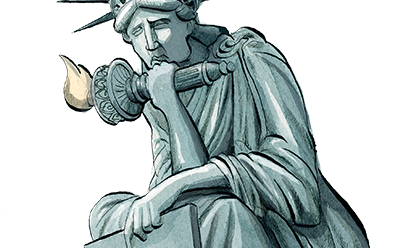
It has been clear for years that the UN has fallen under the influence of left-wing activists and rapacious developing countries, who are using it as a vehicle to press to slavery and climate reparations. But the UN’s latest initiative is possibly the nuttiest of them all. The General Assembly will vote today on whether to try to eradicate world maps drawn on a Mercator projection on the grounds that they are “colonialist” – and replace them with a favored map which is much more honest in representing the size of individual countries. The campaign against “cartographic colonialism” began with an online “correct the map” campaign and has now been taken up by Togo, backed by the African Union countries.

Gloria Steinem

Gloria Steinem made feminism slick – and dishonest

So, it’s farewell to Gloria Steinem at the astonishing age of 92: the feminist whose most striking attribute to those outside the movement was that she was terrifically easy on the eye. It didn’t endear her to the ugly sisters of the movement who complained about her unholy glamour, but it was an advantage she put to good use when she became a Playboy Bunny Girl in 1963 so as to write for Stage magazine about the sheer disagreeableness of life in that bit of Hugh Heffner’s porn kingdom.

Wendell Berry’s homecoming

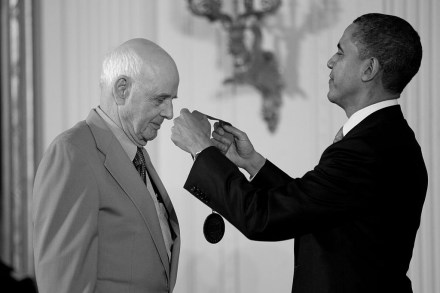
Wendell Berry, who died Monday aged 92, was a man who loved the soil and the soul. Writing from Kentucky, where his family has lived and farmed for generations, Berry built up, over more than sixty years, a corpus of fiction, non-fiction and poetry – all genres in which he distinguished himself – which, when taken as whole, reveals a profound and coherent philosophy of the earth and how it relates to human community.  Unfortunately, the average person probably doesn’t know who Berry is. Even those who have heard of him might only know his incendiary 1987 Harper’s essay “Why I Am Not Going to Buy a Computer” or his watershed 1977 takedown of maximalist agricultural practices, The Unsettling of America.

wendell berry

An agreeable new 2D fighter

Grade: B The final boss of Marvel Tokon: Fighting Souls, called the Champion (they could have tried harder), is up front about his philosophy. “Actions are worth more than any word,” he says. “And the greatest action is... to fight!” Well, that’s Proust told, the big biscuit-dunking jessie. Here’s a very competently made, agreeably hectic new entry in the lineage of that most apparently basic of computer games, the 2D fighter. Ever since the heady days of Yie Ar Kung-Fu, gamers have known there’s fun to be had in having a couple of cartoon characters square off and slap each other upside the face. This one is an anime-style battler featuring an initial roster of 20 well-beloved Marvel superheroes (Wolverine, Deadpool, Captain America, etc.

The terror of Russian prisons

The competition must be pretty stiff for “World’s worst airport to be caught with drugs in your baggage”: Bogota? Miami? Singapore? Ciudad de la Paz? Gatwick? But Moscow would surely have to be a strong contender. I’ve been detained there myself, only for an hour. But you’re never told why you’re being kept waiting, how much longer it will be, or whether this is routine or serious. The young men and women in those oversized peaked hats are perfectly civil but apart from the impenetrable language barrier you’re dealing with several centuries’ worth of culturally-inbred opacity and bureaucracy. And the prisons don’t bear thinking about.

A true visual spectacle: Edinburgh’s The Galloping Cure reviewed

Those lights! Thinking back on The Galloping Cure, Missy Mazzoli’s new opera for the Edinburgh International Festival, that’s what lingers: cascades of lights, shimmering and flickering in every hue that modern LED technology can supply. At first the effect is almost Zen – soothing washes of pinks and blues and ochers, with carousel horses rising and weaving among them. Then, as the action intensifies and the characters succumb to collective mania, they’re brighter, faster, more aggressive: a frantic sensory overload, flashing to the rave-derived backbeat of Mazzoli’s score. Lucy Carter’s lighting designs are meant to transfix you, and they really do. Hardly the point of an opera, you might say.

Renoir was a master – let no one tell you otherwise

It was summer 1874 at Claude Monet’s house in Argenteuil on the Seine just outside Paris. Édouard Manet arrived from his house at Gennevilliers, on the opposite bank, and began painting Monet’s wife and young son in the garden. Auguste Renoir turned up and started to paint the same scene alongside Manet. The little masterpiece he created is in the forthcoming exhibition Renoir and Love at the National Gallery. In 1924, Monet recalled that day half a century earlier: Manet, seduced by the color and the light, decided to paint a picture en plein air of people under the trees… Renoir arrived… He asked me for my palette, a brush and a canvas, and there he was, painting away beside Manet.

A world full of artifice: Life of M, by Rachel Cusk, reviewed

The twin themes of Rachel Cusk’s latest novel are truth and fame. In fact it’s not quite accurate to call it a “novel”: there are two main characters, but there is no plot; and although you start to understand each woman, it’s through observation of their behavior in a series of vignettes rather than a conventional story. The titular “M” is an actress of beauty and renown, reportedly based on Natalie Portman. Her friend, the unnamed narrator, wants to write her biography. “Would you just make it up?” M suggests airily, giving us a notion of how fabrication is sewn into her life.

Will this century see the end of books?

Anyone proposing to publish a polemic between hard covers about the decline of literacy and reading will, of course, find themselves preaching to the choir. If you read books, you will agree with this one; if you don’t, your negligence will not be touched by its fervor. I won’t say that it is a useless object, merely how unhelpful it would be simply to agree with its main point. The decline of reading practices is quite convincingly demonstrated in surveys. Fewer and fewer people in the US and Britain read habitually, by their own admission. In one celebrated case, an entire cohort of English literature students in America was unable to make anything at all of the first page of Bleak House.

The spellbinding power of the du Maurier family

“We can never go back again,” wrote Daphne du Maurier in her bestselling novel Rebecca (1938). “The past is still too close to us.” Yet back she went, in book after book, to the past of her remarkable family. In 1934, six months after the death of her father, the matinée idol Gerald du Maurier, Daphne wrote his biography, portraying him as a spoiled man-baby with a “stable” of mistresses. Gerald’s own father, George du Maurier, was the celebrated book illustrator and Punch cartoonist whose characters such as Mrs. Ponsonby de Tomkyns and Lady Gatheremall skewered the Victorian nouveaux riches.

Why Wendell Berry mattered

Like most adults who write their thoughts down regularly, I was raised in a home by a mother who maintained piles of books strewn around the house. There were more books than anyone in our home could read combined, but you could find our favorites open on tabletops and dressers with a pencil, or another book, pinned in them to hold a page. Most of these books that were propped open were my mother’s and they included dozens of Wendell Berry’s works. I slowly absorbed a version of Berry’s way of thinking: through reading, through my mom’s infatuation with his work, through osmosis as I watched Cartoon Network next to open copies of Hannah Coulter and What are People For? Berry has begun to suffer the same literary fate as C.S.

wendell berry